Marketing Events
Coffee Cart as a Marketing Channel You Can Measure
A coffee cart can be a channel, not just catering, but only if you can count what it did. We build the activation backward from one action worth measuring, then run it so the number at the end actually means something.
And when it works in one city, it should work in the next. The harder problem on a roadshow is consistency: the same brand, the same setup, the same drink in every market. That is the part we own, so the campaign reads identical in every market: Austin, Chicago, wherever it lands next.
Book Your CartBuilt Backward From One Number
A marketing activation starts with the action you want to count, not the coffee menu. Pick the one thing you want to count. A scan, a sign-up, a sample claimed, a page visited. Then we build the cart backward from it: the offer on the sleeve, the single line the barista says, the QR placed where a guest’s hands already are while they wait. Cups poured tells you reach. The action tells you whether the reach did anything.
On a multi-city run we give each stop its own QR or landing page, so at the end you know which market pulled its weight instead of guessing at a blended total. The kit ships and reassembles the same way in every city, because a brand that looks polished in one market and thrown-together in the next spends its budget teaching people two different things.
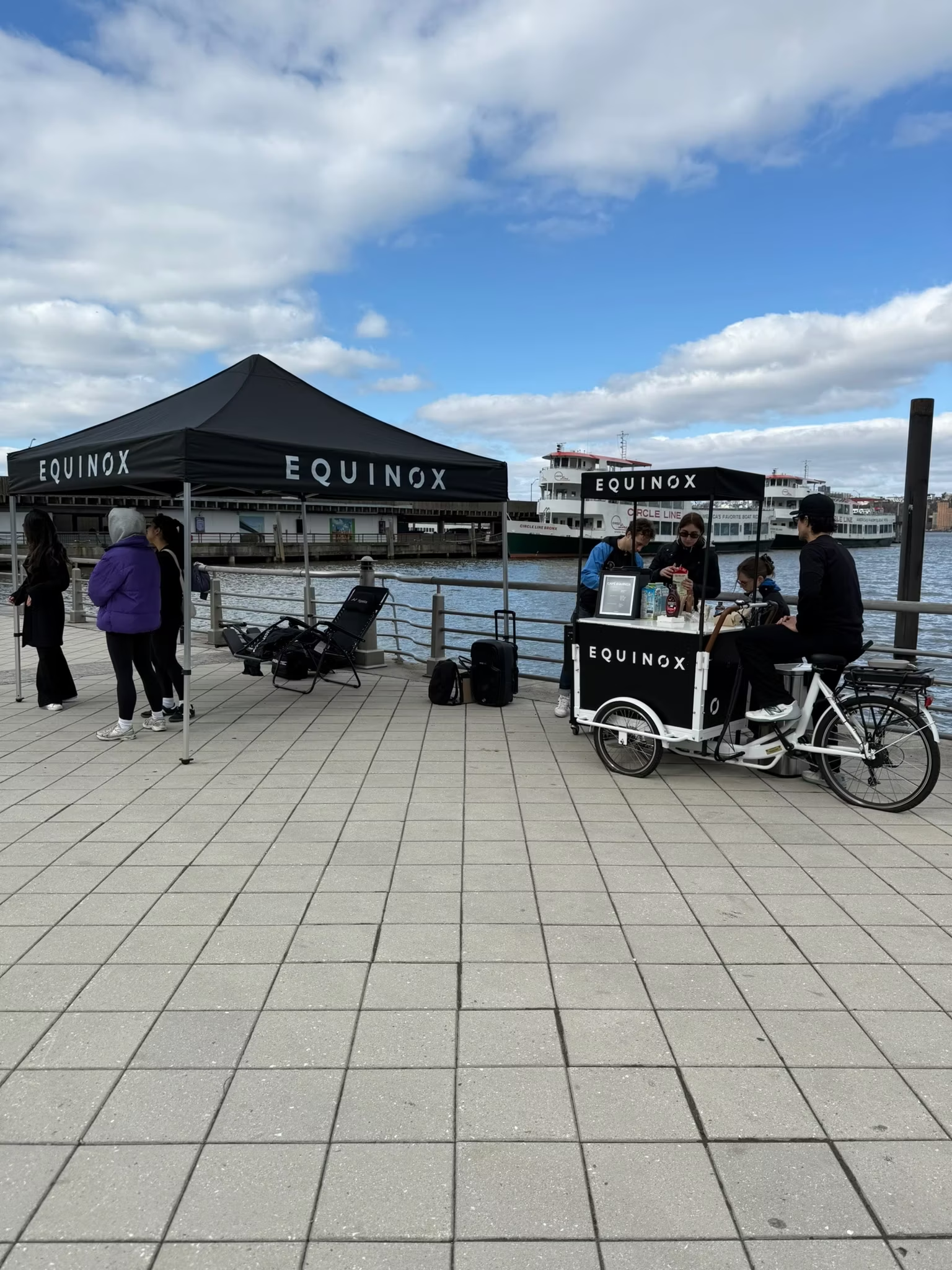
What's Included
The whole activation built backward from one action you can count: a scan, a sign-up, a sample claimed
A unique QR or landing page per city or per stop, so a multi-market run tells you which location earned its keep
Timing set to when your audience is physically densest, because a cart at the wrong hour serves half the people
A kit that ships and reassembles the same way city to city, so the brand looks identical in every market
Placement at peak-density points: festival gates, the lunch rush, the campus gap between classes
Permits, power, staffing, and the on-site run handled in each market, end to end
Timing and Density Beat Duration
Where and when decide the result more than how long you run. A cart parked through a dead afternoon serves half the people a cart timed to the festival gates, the lunch rush, or the campus gap between classes will. We go when your audience is physically densest and place the cart in the path they are already taking, because reach is a function of foot traffic you cannot manufacture by staying open later.
Measured against a channel you already buy, coffee competes on cost per conversation, not cost per impression. The production is front-loaded, then every interaction after is a person who stopped, took something branded, and did the one action you asked for. For a defined audience standing in a place you chose at a time you chose, few channels earn attention that directly.
Book Your CartFrequently Asked Questions
Measurement, multi-city consistency, timing, and cost. Notes from campaign activations we’ve run in the field.
You pick one action worth counting before anything else, then build the cart backward from it. Cups poured is your reach number, the count of people who stopped and took something branded. Scans, sign-ups, and redemptions are your action number. To make the action real rather than a guess, we route it through a QR or short URL that exists only for this activation, so the traffic it drives is attributable to the cart and not tangled up with the rest of your marketing.
Yes, and the hard part is not the coffee. It is consistency. A brand that looks sharp in Austin and improvised in Chicago undercuts the whole campaign. We build the setup as a kit that ships and reassembles identically in every market, with the same wrap, menu, and drink in each. We also give each stop its own QR or landing page, so at the end of the run you know which cities earned their keep instead of staring at one blended number.
Timing beats duration, every time. A cart parked through a dead afternoon serves half the people a cart timed to the moment your audience is actually there: festival gates at open, the lunch rush, the ten minutes when a campus empties between classes. Reach is a function of foot traffic you cannot manufacture by staying open longer, so we aim the hours at density instead of stretching them to look busy.
Think in cost per conversation, not cost per impression. Production is front-loaded on the wrap, the cups, and the kit, and after that every interaction is a person who physically stopped, took a branded object, and completed the one action you asked for. That is a more expensive impression than a digital view and a far cheaper one than most in-person channels, and the people it reaches were standing in a place you chose at a time you chose.
Festivals, sponsor villages, campus programs, field marketing, and multi-city roadshows. The common thread is a defined audience standing in a physical place at a known time. That is exactly the setup a cart converts well, because you can put it in their path and time it to when they are there. If the audience is diffuse or purely online, a cart is the wrong tool and we will say so.